Nonprofit Web Application Development
Most nonprofit web work is a brochure site with a donate button bolted on. That is fine until the organisation actually does something: matches mentors to members, coordinates volunteers, runs a case pipeline, teaches a curriculum. At that point the website stops being marketing and becomes the operation, and a page builder cannot carry it. The alternative usually quoted is enterprise software at enterprise prices. This is the third option — the same engineering standards, sized for a nonprofit budget. Every platform on this site was built for an organisation that had crossed that line.
Who this is for
- Nonprofits whose programme work has outgrown spreadsheets and social media threads
- Organisations running on grants and donations, where budget is real and finite
- Teams with no in-house developer, who need something they can operate themselves
- Causes where the subject matter is sensitive and presentation carries weight
What it includes
Programme tooling, not just pages
Member matching, case intake, volunteer coordination, resource directories — the parts that actually run the organisation.
Funding paths built in
Donations, storefronts and paid programmes, so the platform can help pay for itself rather than being pure cost.
Built to be handed over
You should not need to call a developer to publish a page or add a resource. Nor should you be locked to one.
Care with sensitive subjects
Several of these platforms serve people in genuine distress. Tone, privacy and restraint are design requirements, not polish.
Platforms we've shipped
Not a capability list — these are live, and you can visit them.
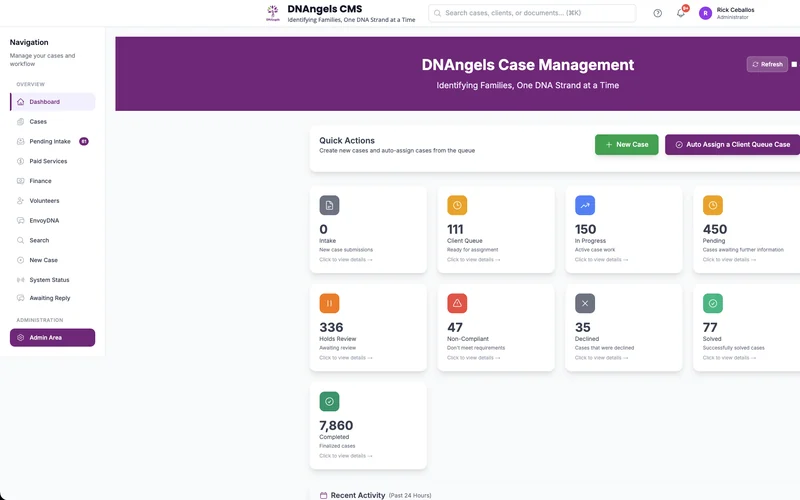
The operational platform behind a genetic genealogy nonprofit — 9,500+ cases, encrypted client records, a threaded messaging system and a mobile app for volunteers in the field.
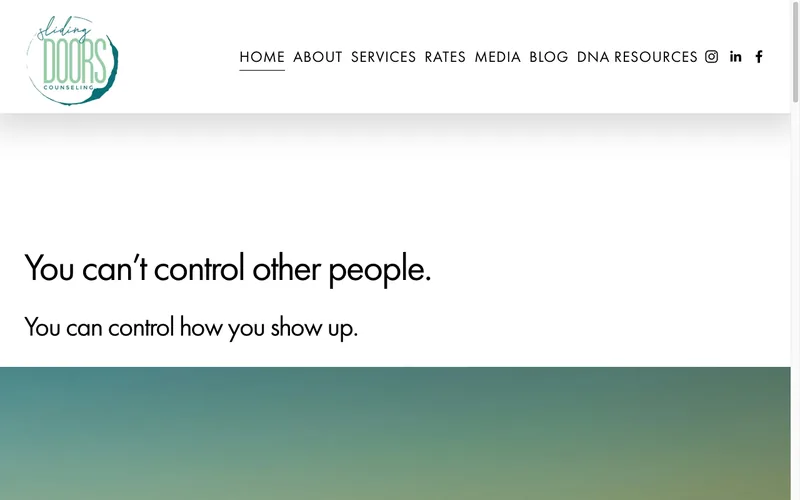
Practice site for a therapist in Eagan, MN specialising in DNA discoveries, individual counseling and co-parenting coaching.
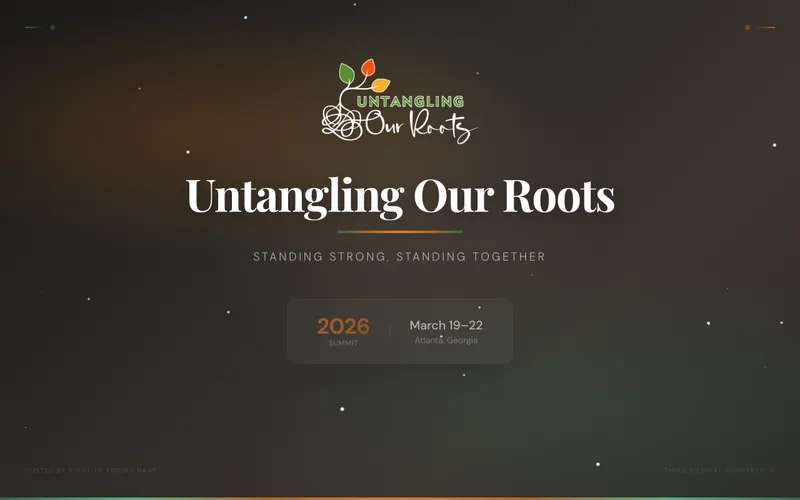
Platform for the Untangling Our Roots summit — programme, speakers and registration for a biennial conference.
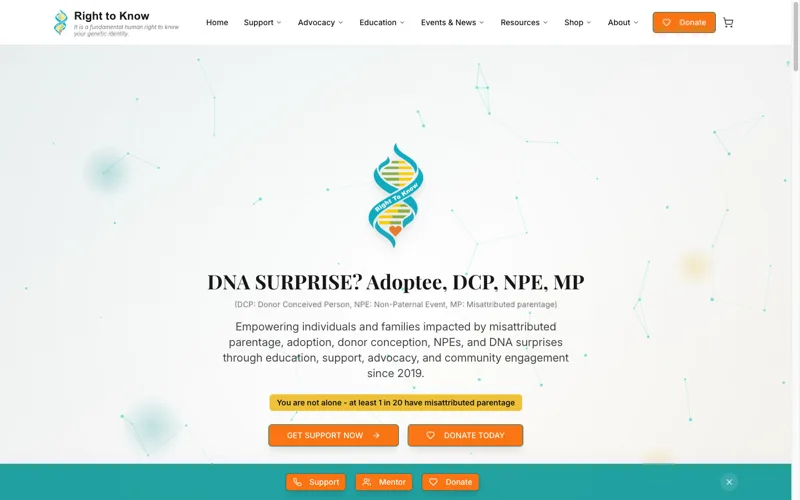
A peer-support, education and advocacy platform for people affected by misattributed parentage, adoption and donor conception.
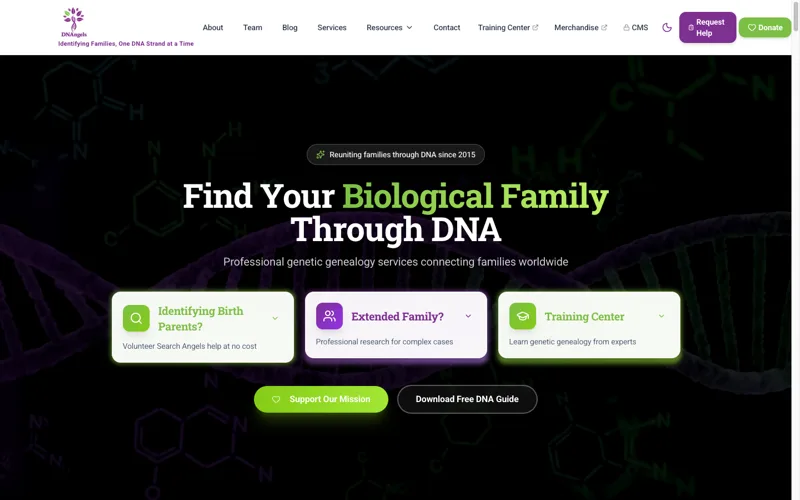
The main site for a nonprofit that uses DNA testing and genealogy research to help people find biological relatives.
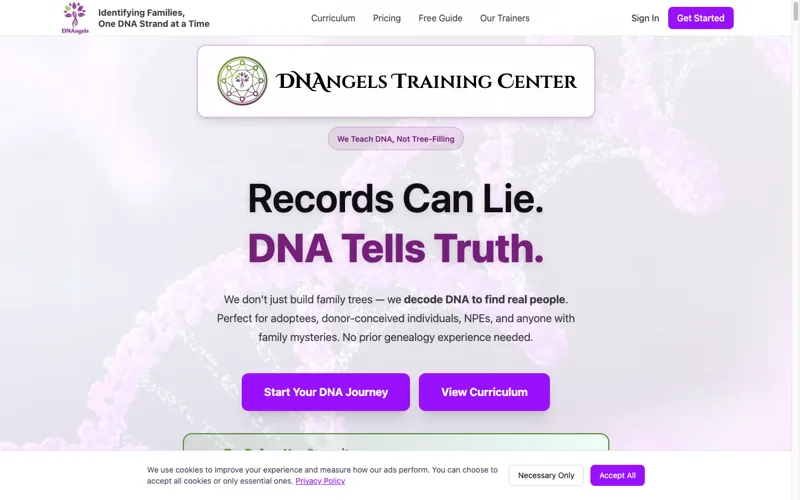
A full learning management system that trains the next generation of genetic genealogy volunteers, with billing and certification.
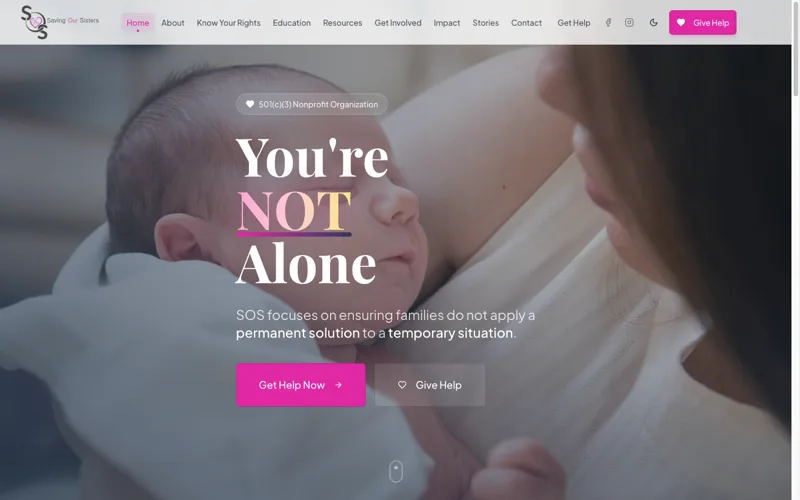
A resource and volunteer coordination platform for expectant mothers facing crisis pregnancies.
Common questions
Do you work with small nonprofit budgets?
Yes — most of the organisations here are small teams funded by grants and donations, and most projects land around $10,000. The realistic conversation is about scope and sequencing: what has to exist for launch, and what can wait until it has proved itself.
How long does a nonprofit platform take to build?
Most projects ship in 15 to 30 days. That is unusual, and it is a consequence of having built the same architecture ten times rather than of cutting corners — the decisions that normally consume the first month are already made. Long-running platform work is the exception and is scoped as an ongoing engagement rather than a project.
What does this typically cost?
Most projects land around $10,000. Larger platform work — the kind that runs for a year and replaces an organisation's core operations — is a different conversation and is scoped accordingly. If your budget is well under that, say so early: sometimes the honest answer is that an off-the-shelf product fits, and I would rather tell you that in the first call than the third.
Can our team run it without a developer?
That is the goal, and it is a design constraint from the start. If you need to file a ticket to change a page, the build has failed.
Tell me what you're trying to build
If a smaller off-the-shelf tool would serve you better, I'll say so.
Start a conversation